Eight sites changing due to climate change: BioClima helps protect biodiversity
FAV
Cooperation
Science and research
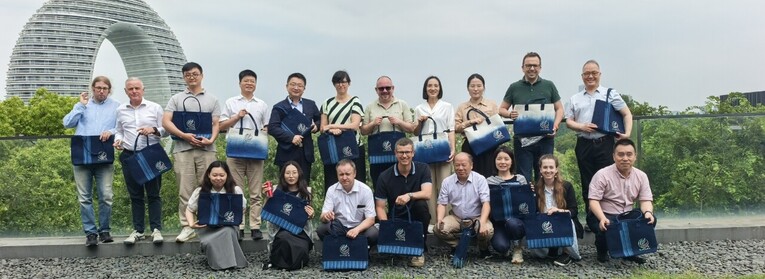
Last year, 36 European and Chinese institutions decided to collaborate on strengthening climate change resilience. They recently shared initial findings and data from eight pilot sites in Europe and Asia at a meeting in China. FAV coordinates the BioClima project at UWB.
An international team of scientists relies on satellite imagery, aerial data, drones, and ground samples to determine how the landscape is changing due to climate change. The collected data will help them better understand the impacts of drought, identify fire risks, and provide a comprehensive view of the state of nature.
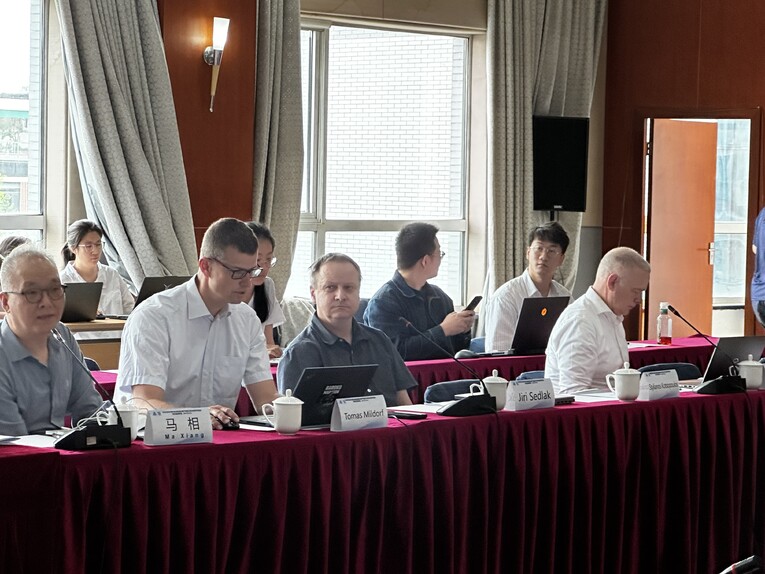
A specific example is a Czech case study in the Vysočina region, where researchers have been integrating Sentinel and Landsat satellite data, drone imagery, field botanical observations, meteorological measurements, soil sensors, and laboratory soil analyses since last summer. They are also observing the effects of bark beetles and the influence of various forest stand types. Other European pilot sites where international teams are currently working have similar focuses. “In Finland, for example, we are also monitoring atmospheric carbon levels and the development of boreal and Arctic ecosystems. In the Austrian Alps, the focus is on forest fire risk. Likewise, in Crete, optical and thermal data from the Sentinel-2 and Landsat 8/9 satellites are being used to monitor drought impacts. In Belgium, we have focused our research on intensively used rural landscapes, soil, water, and the potential of digital twins for assessing ecosystem functions,” explained project coordinator Tomáš Mildorf from the Faculty of Agriculture at the University of West Bohemia. In total, the BioClima project currently includes eight pilot sites.
An important part of the program in China—where representatives from the institutions traveled in early summer—was the exchange of these experiences from specific locations in Europe and China. Liu Yalan from the Aerospace Information Research Institute emphasized the importance of international cooperation: “Although our research activities are conducted differently in Europe and China, we share a common goal—to strengthen biodiversity conservation and deepen our understanding of the impacts of climate change through joint monitoring, data sharing, and scientific collaboration.”
In addition to collecting data from the participating countries, the project is now focusing on ensuring the data can be used as effectively as possible in the future. A methodology is being developed to standardize data collection methods using satellite observations, drones, field measurements, soil data, and artificial intelligence. This will make it possible to compare the impact of climate change across different biogeographic regions. One platform for sharing this information will be the China-EU Biodiversity Exchange Center, whose opening was one of the highlights of the May visit.
Gallery
Faculty of Applied Sciences
|
Martina Batková, Monika Mundilová
|
23. 07. 2026
|