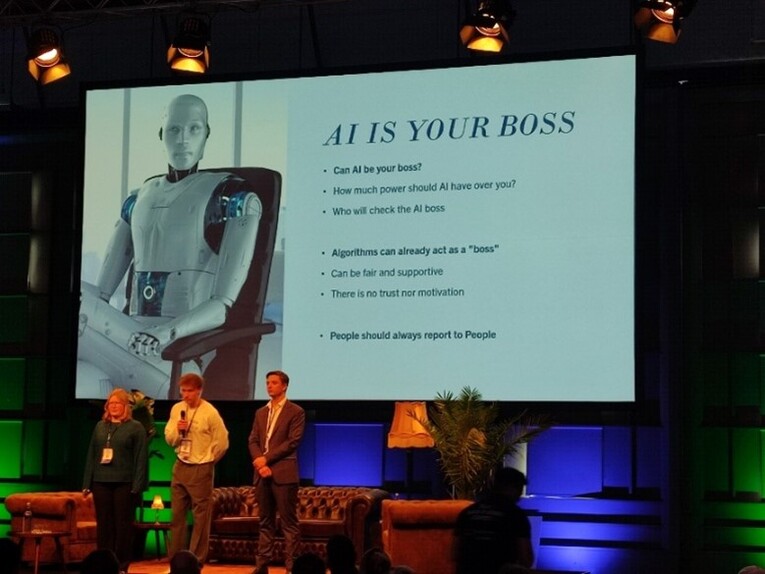
AI as a direct boss? Morally unacceptable, speakers said at a Hague summit
FAV
FEK
Achievements
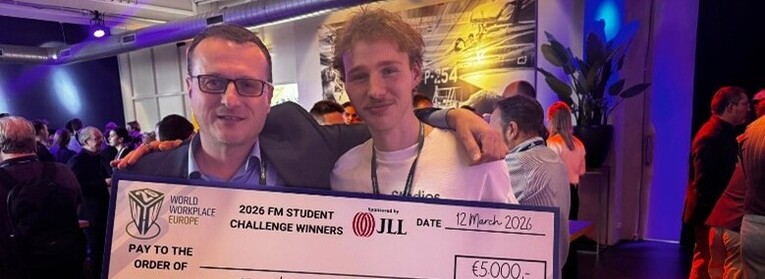
Artificial intelligence can support facility management, but would people accept it as their boss? This year’s World Workplace Europe summit focused on safety and recognized innovation, including a student award for an international team. Among the winners was a student from UWB.
A proposal for the use of AI in facility management, including a potential solution for the future coexistence of humans and artificial intelligence. A Czech-German-Dutch team tackled this challenge in a student competition at the
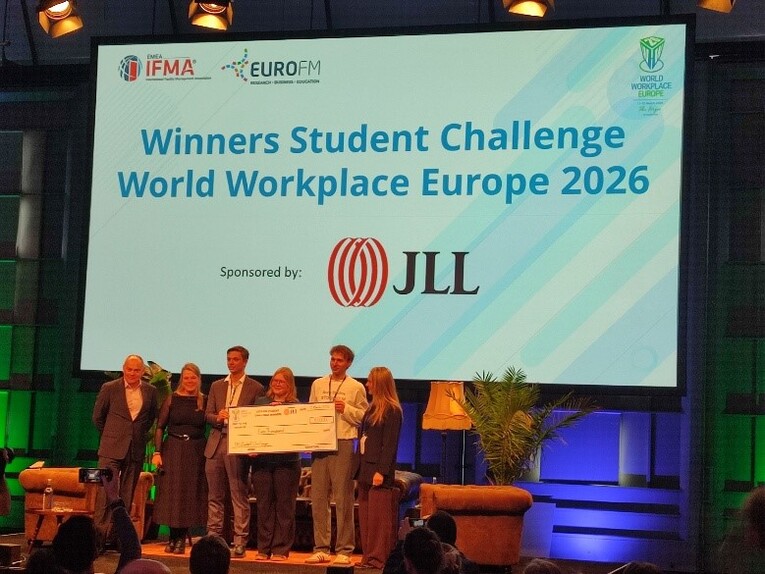
World Workplace Europe 2026 summit in mid-March. According to the jury, they presented the best solution, and the students returned from The Hague with the FM Award.
William Faist, a student at the Faculty of Applied Sciences at the University of West Bohemia in Pilsen (FAV), was a member of the winning team.
“We focused on safeguarding the relationship between human employees and artificial intelligence, establishing control mechanisms, and defining how people should best collaborate with AI models,” William explained.
In a competition focused on the future of facility management, he and his colleagues explored AI as a direct supervisor. They took a comprehensive approach to the problem. They conducted preliminary research and consulted with experts in the field and practitioners. They concluded that, from the perspective of sustainable workplace morale, it is not feasible in practice for AI to serve as a direct supervisor. “People simply aren’t willing to answer to a machine. Our proposal, therefore, reflected current trends and clearly identified the pitfalls of the concept of AI as your boss,” said William Faist. He also described how his team addressed the issue: “We presented a solution to protect users in their interactions with AI and proposed a revised framework for collaboration, in which AI bots, AI agents, and AI models themselves function as tools rather than supervisors.” The winning team received 5,000 euros and an invitation to this year’s global facility management summit in the U.S.
An expert jury evaluated the presentations of the three participating teams. The jury took into account the significance and insight into the nature of the problem, the originality of the presentation, the feasibility of the proposed solutions, teamwork, and the persuasiveness of the vision. According to Jan Pašek, head of the Department of Civil Engineering at the Faculty of Architecture and Construction (FAV), the significance of this success for the UWB student is enormous: “Success in such a prestigious international competition is by no means a given and confirms that UWB can prepare students in the field of civil engineering to a very high professional standard.” However, Pašek did not praise only William Faist: “During discussions with several experts at the summit, I noted their appreciation of the high professional and social caliber of our students’ conduct.”
A total of fourteen students from the master’s program in Civil Engineering – Modern Buildings, specializing in Building Operations Management, participated in the European summit in The Hague, Netherlands. The Faculty of Applied Sciences and the Faculty of Economics are primarily providing instruction in this specialization at UWB. Students acquire knowledge and skills in building management throughout the building’s life cycle, including its technologies and working with building users. The Civil Engineering – Modern Buildings program is supported by the
InterCora Stiftung
, which contributes to its further development and to international cooperation among students and faculty.
Gallery
Faculty of Applied Sciences
|
Martina Batková
|
25. 03. 2026
|